The concept of free labor has always interested me. The appeal of it all is that we are constantly in conflict with ourselves in terms of deciding whether free labor is a positive/beneficial thing or not. But there are always different perspectives to look at when discussing every solitary subject/matter. I believe in the fact that free labor is necessary in the world we live in because without it, there is no communism portion, just happened to be stuck in the capitalist way of thinking. New and exciting innovations in the social media world, for instance, happen to pave the road to a new capitalist way of thinking. In addition to Tony's points and Ross' points in
Creative Labor bring up the importance that Facebook brought in immense amounts of revenue from solely being a free social media website for the world to use. "The trade-off for users, of course is free access to the platform and the software, but,
from the company's perspective, the cost of hosting and maintenance is dwarfed by the trade-able
value of the information it can extract from user's playful labor, or "playbor" as it has
been termed" (Ross 299). Advertisements and in-app purchases tend to be the basis for surviving and maintaining a site that welcomes so many users. We often forget to remind ourselves that we are the reason for their financial success in these free sites and applications. These are the micro-transactions that exist within applications that initially allow people to purchase them for free. There is a term often referred to as freemiums which exist everywhere that pose as free applications that give you the opportunity to gain the upper hand on a game on others that wouldn't have otherwise. For more information on freemiums, you can click on this link
here or
here. For example, let's say you can purchase an option to have no advertisements while you play or even be given extra lives if you ran out of time/money. These options that give the upper hand in these applications ultimately pay for them to be downloaded for free in the first place. By giving them ratings and spreading the word about them as well as playing in front of your friends, we consider this as free labor we give because we are not getting paid to advertise nor do we work for them directly.

With this being said, we can imagine ourselves as free laborers in this sense because of the various ways we help companies like these without even consciously realizing it. One main way we give this free labor is by word of mouth and sharing links to our social media websites. In order to receive more information about a person including pictures and interests, we often exchange Facebook, Twitter, and Instagram accounts. A lot of websites now have that option of linking your profiles in order to make registration easier that also gives that free labor of giving these sites more traffic. Later on in Ross' article, he mentions Karl Marx and whether or not his work still applies to the world today. Karl Marx often laid a basis of understanding the increasing dependence of capitalism on the social brain (303). Everyone in this generation happens to show signs of materialism by constantly being attached to their electronic devices in ways that help them investigate new available information to the public. Everyone engages in technological advances as well as determining what is important to suggest to friends/family to signify the occurrence of free labor that exists when discussing the new popular apps.
In my opinion, Ukeles made a great point in her
Manifesto because the two systems she described which are maintenance and development really stuck out to me as being the way the world works in simple yet complex terms. The maintenance system requires that of people to prolong the advancement and progress of the creation because we need to preserve what has been created. That is entirely true when we are discussing what goes on in a business/company. They strive for development however there is a saying that goes "if it's not broke then don't fix it". I firmly disagree with this term for several reasons: we live in a world where we are so far advanced in technology it's almost impossible to think of different, new ideas. That's where we're wrong. Yes you can fix a product but once that becomes the new commodity, you are going to have to constantly be in terms with the current status of this product. That could mean a lot of different options for one product. It continues then to sell at this prestige pricing with the sole intent of increasing the profit margin. As mentioned previously, we can see this is the case when discussing the freemium applications and the fact that we are constantly updating them and checking for improvements as well as bug-fixes. These applications hardly ever stop working for you all together; they just won't be as fast or as helpful without these continuous updates. They continue to make expansions and improvements in order to keep people interested in these applications that otherwise would become boring-some.
Connecting these points to
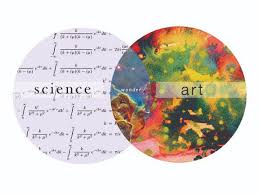
The Body of the Artisan, we can see that these artists that potentially create new forms of economic stability don't always reap the benefits personally. Commodities are transferred through other people and other the third person benefits from it. Naturalization comes into play when discussing the ability of the artist to manipulate these materials in nature. It solely divides the concepts of art and science and how they integrate with one another. Art is known as developing an understanding of the means of nature and how to manipulate it into meaning. Science is known as developing and experimenting to gain the knowledge and explanation of nature (Smith 24). When someone looks at a painting, they are observed on how much time they spend at it, what the caption underneath it says, and their interpretation of the perspective the artist is taking. These meanings could differ between people as well as also possibly completely missing the main idea of the portrait. However, in science, there is quantitative data that coincides with a hypothesis in which you are trying to give an explanation for the model you are proposing. The art of creating a new application based on the perspectives of the right targeted audience should meet the demands of what skills they want to improve in addition to the economic growth of the company. The science of creating a new application is to create it with the maintenance and development of new potential along with successfully profiting from it each time.

Um Kristen, it's really important to note that Ukeles is a woman and that her manifesto was written about women's work being undervalued.
ReplyDelete