The short excerpt from Purves’ work details the nature of three important economies that intersect to create a functional society. They are the traditional or social economy, which is the village-type (it takes a village to raise a child); the command or redistributive economy, in which a state or government entity redistributes assets as necessary in accordance with its goals or policies; and the capital economy, in which resources are exchanged for money or currency. In addition to these three economies, we were introduced to the gift economy, as described by Hyde, in which goods and services are exchanged with no expectation of profit or reward. These types of economies are vastly different, and tend to work best when they are merged together to include some combination of the four.
In relation to artists, the type of economy under which one performs is extremely important. In purely traditional economies, the artist’s role as an artist is likely to be reduced to a hobby, while the needs of the community play an extremely important role in the artist’s life. The subject of such an artist’s work tends to be practicality. This is reflected in the pieces created: bowls, utensils, tools, furniture, etc. In terms of Bourriaud’s relational aesthetics, this artist’s work does not quite fit into his stencil definition: "art taking as its theoretical horizon the realm of human interactions and its social context, rather than the assertion of an independent and private symbolic space,” but it does reflect on the important values of said society.
The creation of tools and useful items to barter and trade reflects the idea that each individual in the social economy does his or her part to support the community. The traditional economy’s artist is an artisan, one who creates practical works of art that serve as a form of currency and as a tool for quotidian life. In addition, this artist also focuses on musical instruments which served as backdrop to the storytelling that helped to keep these communities together. Figurines that honor the gods or qualities these communities saw as valuable. Some of these types of art include:
And while this type of work is not exactly what Bourriaud was referring to, it does shed some light on the social aspects of these communities governed by traditional economies.
Command or redistributive economy artists are those whose art reflects the desires of the "distributing regime." This artist is the stifled one, who has two choices: to conform or to hide. The art of the commanded artist is often a reflection of the myth the regime in power would like to perpetuate. Take a look at the work of celebrated artists under Socialist European nations or Nazi Germany, the art takes on the lies of the government and the ignores the harsh realities that the elites would like to dispel. For example, under Hitler, "the role of the artists was to either portray the German world as peaceful, or as drawn into a struggle for survival to defend it. Thus, art was to become one more weapon in the Nazi regime's arsenal." Take a look at the awarded works of artists who chose to conform.
Kadushkin - Moscow, In Lenin's Steps: Red Square - Taken from Artstor
Savostiuk, O.M. and B.A. Uspenskii - Take Pride, Our Free Earthland - Taken from Artstor
If these artists reflected the shiny, perfect outward appearance of these regimes, then "degenerate" artists represented the seedy underbelly. Their art, which had no overt way of gaining them positive favor, fame, or fortune, is something I think helped to define the relational aesthetic Bourriaud describes in his piece.
Capital economy artists are the one we are the most familiar with. Their creativity is fostered amidst a latent desire for money. Is it greed? Well, in such an economy green makes the world go round, and who's to say artists shouldn't want to survive, or to thrive, even? If conforming to the money requires painting or sculpting what they like, who inhabits a place where they can rightfully call the artist a sell out?
Shepard Fairey - Society for the Preservation of Destruction - Taken from Obey Giant
In order to be an artist who fits into Bourriaud's relational aesthetic, an artist would essentially have to dedicate their artistic integrity to challenging social, historical, cultural, political, etc. myths. Their art must question the reasons why something acts the way it does, while refraining from becoming at object to be made and sold. That's a tough role to play in an economy that is largely capital and far from Hyde's gift. The anti-artisan's economy, ie. the economy for Bourriaud's "non-makers" has not quite presented itself. And while it is important that art speak on social injustices and issues, expecting the artist bear the burden of the relational aesthetic in this current economy may be the straw that breaks the camel's back.
Last week's discussion had my mind running in about fifty directions, and my thoughts are still kind of all over the place. Our discussion about censorship got me thinking back to my high school English classes and our frequent discussions of banned books; so I'll start there. One of my authors at the time was the Ellen Hopkins, a novelist who published a series of fiction books for young adult readers. Hopkins based her books mainly off of her primary-source research (phone calls, interviews, conversations, personal experience, etc.) and each books explores the perils many teenagers and young adults face in America, horrific stories that could easily become reality when the wrong choices are made.
http://ellenhopkins.com/YoungAdult/
Hopkins books have been challenged (and some have been ban) since their publication, for subjects like drug use, sexually explicit content, etc. and she has been dis-invited to numerous speaking engagements when uncomfortable parents expressed their outrage to superintendents about the content of her novels. Hopkins discussed her opinion on censorship and being a banned author in her article for the Huffington Post titled, Banned Books Week 2010: An Anti-Censorship Manifesto. "According to the National Coalition Against Censorship, removing an
author from an event because someone disagrees with their ideas or
content in their books meets the definition of
censorship," Hopkins wrote. Her poem, Manifesto, illustrates the true fears and vulnerability behind the call for censorship, supporting our discussion of how it is in the best interest of the ruling class to uphold and distribute artifacts reflective of ruling ideology. I also couldn't help but think of Tony's closer look at the banning of Harry Potter as I read it. Take a look...
Manifesto
To you zealots and bigots and false
patriots who live in fear of discourse.
You screamers and banners and burners
who would force books
off shelves in your brand name
of greater good.
You say you're afraid for children,
innocents ripe for corruption
by perversion or sorcery on the page.
But sticks and stones do break
bones, and ignorance is no armor.
You do not speak for me,
and will not deny my kids magic
in favor of miracles.
You say you're afraid for America,
the red, white, and blue corroded
by terrorists, socialists, the sexually
confused. But we are a vast quilt
of patchwork cultures and multi-gendered
identities. You cannot speak for those
whose ancestors braved
different seas.
You say you're afraid for God,
the living word eroded by Muhammed
and Darwin and Magdalene.
But the omnipotent sculptor of heaven
and earth designed intelligence.
Surely you dare not speak
for the father, who opens
his arms to all.
A word to the unwise.
Torch every book.
Char every page.
Burn every word to ash.
Ideas are incombustible.
And therein lies your real fear.
-Ellen Hopkins
I love the simplicity of this poem. There is nothing entirely too complex about it, which is fitting in the sense that it is accessible to the young audience she targets in her novels. Also, I agree with a lot of what Hopkins says about exposing young adults to the "dark, edgy" content of her books, because it is reality for so many of the readers and their peers. I distinctly remember reading CRANK, PERFECT, and TRICKS in the library of my high school, thinking about my best friend Kelsey, who was struggling with a sexually abusive relationship and cutting, and Sam who was coping with coming out as a lesbian and entering into her first relationship (with turned into a mentally and emotionally abusive situation). She, and a few other close friends, struggled with eating disorders. Many of my peers were experimenting or addicted to hard drugs and marijuana. The boy who sat next to me in anatomy was always high on hallucinogenic mushrooms.
Hopkins books not only related to the life of students around me, but provided testimonial and stories of people who overcame difficulties and addictions faced by my friends. The organizations that seek to ban or censor books like Hopkins' or Rowling's want to take them off the self to prevent deviant or subcultural behavior, but I'd argue that exposure to these kinds of books provide solutions to these very things. They encourage independent thought, strong positive morals and values, and the importance of responsibility and careful thought.
Critics and conservatives argue that the art in question (like the Abject Art exhibition) doesn't relate to the general public or the masses, and while that does hold some truth, they fail to recognize the outlet for recovery and self discovery it allows for those who it most poignantly or strongly relate to it. Controversial art evokes necessary discussions, challenges dominant cultural understandings of social structures, and affords the readers/viewers the choice to see it and respond to it or simply to ignore it.
On a related note, just as I was scrolling through Facebook this past week, I stumbled upon a CollegeHumor article about very carefully placed sexually implicit jokes in a familiar kid's show. It also included a little poke at fine art critics from the episode where Squidward teaches Spongebob about the creation, production, and qualifiers of fine art. If you want a good laugh, take a look at this article.
I started to wonder about just how much 'explicit' or sexually implicit content was really present in the shows I watched as a child (much younger than the readers of Hopkins' books). I found endless links to sexual, homosexual, and sensitive content in children's tv shows. One of the most shocking: 24 Filthy Adult Jokes In Cartoons You Completely Missed As A Kid.
There are, I'm sure, plenty of reasons why these suggestive clips are aired without issue or censorship, and why publicly funded art that is seen by far fewer people is subjected to so much scrutiny. However, I still find it hard to believe that so many mainstream books, movies, and art collections are challenged for things that I find far less offensive than the jokes and references in cartoons. Maybe it's because the books, movies, and art are created for a purpose, and include 'questionable material' for a reason; and because of that, it is suppressed and censored.
If you get the chance, please also take a look at this article by Terry McCabe from a 1990 edition of the Chicago Tribune. He poses an interesting set of arguments, some of them not necessarily align with what we spoke about in class. I don't think it's contradictory, but complimentary. Take a look at Why It`s Necessary To Fund Controversial Art, Too.
If you want to read more about Hopkins and her books, see these links:
http://childrensbooks.about.com/od/censorship/a/Teen-Author-Ellen-Hopkins-On-Censorship.htm
This week our discussion of culture wars and banned material lead to a dumping ground of outrageously banned items. One of these: hair. This seems strange and a little outrageous because how can hair, a natural, human, attribute be banned? What's interesting about the answer is the type of hair that's most commonly banned, especially in the United States. Dreadlocks, dreads, or locs, by definition, is a "hairstyle where the hair that one would normally combo shed locks on itself, creating replace strands. Hair is not combed during the locking process, which it what causes the strands to coil around themselves into fused units" (Black Hair). Commonly associated with the West Indies, reggae, and African-Americans, dreadlocks have been a part of black culture for years. Disney actress, Zendaya Coleman, sported gorgeous, waist-length locs to the Oscars as a way to bring some positive association(her own relational aesthetic?) to the style. Fashion-police star, Giuliana Rancic, however, had something else to say:
Zendaya responded quite eloquently via Instagram and Rancic was eventually pressured to apologize.
While this exchange is not itself an example of banned material, the sentiments expressed by Giuliana are the same ones fueling the incessant banning of dreads, afros, puffs, braids and other almost exclusively African-American hairstyles. Schools and other institutions all over (see here, here, here, here, and here) have been enacting their own rules that ban these types of hairstyles on students and staff.
HR Morning's Dan Wisniewski, penned an article titled "Is banning dreadlocks a race bias?" about a case that examined the issue. A candidate for a position at Catastrophe Management Solutions was offered a job, as long as she cut her dreads. When the candidate refused, the position was rescinded. She then went to the EEOC, which filed a suit on her behalf. The EEOC argued that "the policy banning dreadlocks in the workplace qualified as race bias against African-American employees;" the court vehemently disagreed. "Dreadlocks aren't a sole characteristics of African-American people, so banning them in the workplace doesn't amount to race bias." What does this mean for the culture wars? As we discussed a few weeks ago, the avant-grade reflected the needs of the powerful, and the works which were not classified as such were often "deviant." So when those in power deny funding/accreditation to the "kitsch," and create the rules that govern all, how can this all be reconciled?
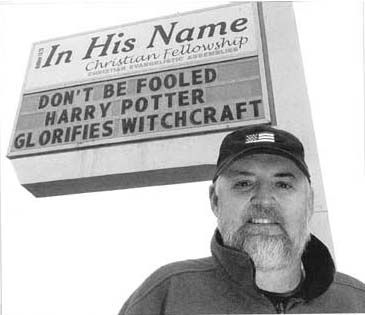
Tony, Carmela, and Bill all referenced different creative works that have been censored to “protect” innocence. Harry Potter because it will cause children to worship the devil and practice witchcraft, LGBTQ artwork because homosexuality is wrong, and South Park because it is inappropriate. The reality is that these reasons aren’t held as truths for all viewers or readers. This poses a problem, obviously, because there is never a universal culture that values things equally or interprets things the same way. So, when right-winged lawmakers and funders take action to ban or censor things that they don’t agree with, they are silencing the interpretations and voices of those with whom the creative works resonate. Another book that has been banned is The Bluest Eye by Toni Morrison because it has graphic sexual content and language. This has since been retained, but like I Know Why the Caged Bird Sings by Maya Angelou, also banned for sexually explicit language and violence, those cited scenes are examples of gender violence against women of color. Both books address racial issues, which is really what is offensive to those fighting for the books to be banned. What is overlooked is the historic context.
Censorship is by no means something of the past. As recently as this month, lawmakers in OK are trying to ban the established AP US History course because it tarnishes the perfect picture of the US. The goal is to protect students from “misinformation” that “reduces the roles of the Founding Fathers” and instead highlight what is good and “exceptional” about the country. Similar to the right-wing objective of protecting the innocent from things that can cause our American culture to deteriorate (like homosexual art, witchcraft literature), not allowing US students to learn alternate histories keeps them from learning how to think critically about the things we’ve done and instead encourages the reinforcement of the beliefs and ideologies about the US that the conservative lawmakers hold.
Also, Gayle Rubin’s essay Thinking Sex talks about moral panics and censorship through legislation. This ties to what Carmela talked about with the banning and destruction of art because it showed homosexual images and explicitly sexual things. She talks about the ways legislation has been used to attack those things that are ruining the quality of culture in the US. Her point is that while obscenity laws may actually have good intentions, like protecting children from sexual exploitation, they are often overdoing it. In this example, the laws extend into material that has no intention of being offensive or obscene. She references photographer Jacqueline Livingston to talk about the “child porn panic.” Livingston was fired from her position as a photography professor at Cornell University for an exhibit which contained nude photos of her seven-year-old son reasons.
“At one point, Kodak
confiscated some of her film, and for several months, Livingston lived with the
threat of prosecution under the child pornography laws. The Tompkins Country
Department of Social Services investigated her fitness as a parent.
Livingston’s posters have been collected by the Museum of Modern Art, the
Metropolitan, and other major museums.” (Rubin, 146-147)
These attempts to censor the work that artists, writers, filmmakers, etc. (and historians, in the case of Oklahoma) are attempts to produce a culture where the ways of thinking, expressing, and feeling are limited to one way. If carried out, it can lead to really scary consequences.
When you think about it
something is always getting banned, mostly because it threatens the
conservative way of life. So it comes to no surprise that there is censorship
of LGBTQ Art for being obscene, vulgar, offensive, lurid, degenerate, and the
list could go on and on. We talked about the Corocoran gallery and the NEA.
These photos were seen as nothing better than pornographic images. “The Perfect
Moment” was not a well-liked gallery and to put it shortly Helms used his
political influence to bully Corcoran into cancelling the show.
It’s been this way for years;
LGBTQ art is not “mainstream” and therefore is deemed to be some kind of
degenerate art. Censorship didn’t stop just at banning, but people would go as
far to vandalize artwork, in fact art has been destroyed even after
installation. This kind of attack on anyone’s art is enough to make some
artists run away. They would go back into the closet and set their own work
aflame. This was in order to have some semblance of control where at least the
destruction of the art was in a way to respect their pieces. However this self-censorship
was perhaps even more deadly than the government enforced one. Either an artist
stopped all together or they steadily avoided anything that could be perceived
as homosexual subject matter.
It was argued that it wasn't
censored because of the homosexual content but of the pornographic content. But
artists who refused to be held back because of prohibitions were censored even
if it was just sympathetically or positive art of LGBTQ people and culture. Censorship
is a mostly horrible act, especially to those whose creativity is suddenly
contained and ridiculed. However, in some instances there is a positive
backlash to this.
Prohibition causes the object
of censorship to attract wider attraction and all together encourages the
censored object. The prohibition of alcohol merely led to more people getting
drunk and you know the rise of organized crime. Speakeasies became a thing and
moonshine was a thriving business. We have at least one popular HBO show and
Lawless the movie to show just how well that one went.
They took the censorship of
Mappkethrope’s art and counter it exhibiting images that were considered too
obscene by conservatives. This exhibition is titled “Irreverent: A Celebration
of Censorship.”
“The exhibition draws inspiration from the
innovative responses to watershed moments in the history of censoring LGBTQ art
in Canada, England, Ireland, the Netherlands, South Africa, Sweden, Turkey, and
the United States," exhibition curator Jennifer Tyburczy explained in a
press release. "In concept, the show is principally drawn from two events:
the censorship of Robert Mapplethorpe’s art in the 1980s and 1990s and the more
recent withdrawal of David Wojnarowicz’s 'A Fire in My Belly' from the National
Portrait Gallery in 2010. In practice, it seizes on the international fame of
these controversies to delve deeper into the many ways that censorship
functions in queer artistic life.” (http://www.huffingtonpost.com/2015/02/02/irreverent-a-celebration-of-censorship_n_6566530.html)
Woodson, Jason, This Kid -
20 Years On - A Tribute to David Wojnarowicz' Untitled - This Kid, 2010, framed
giclee print, 23.386 x 33.110 in. Collection of Jason C. Woodson
This week in class, we spoke a great amount about NEA
defunding and the censorship within the art world. This, in addition to having
to find something to bring into class, got me thinking about Harry Potter and how it has been
censored and even banned in places all across the world. Before I get into the
main points, I need to come out and say that I’m a HUGE Harry Potter fan and some of my arguments may be swayed. In class
on Thursday, I mentioned that the Harry
Potter series is currently the most banned series or collection of books in
the entire world. Additionally, years 1-4 are the seventh most banned collection
of books. The same books are within the top ten banned books across the globe!
This, to me, is mind boggling.
At first, the books were well received by many stating that
the series would become classics for everyone to read for years and years to
come. However, everything changed with the release of the fifth year, Harry Potter and the Order of the Phoenix.
Not only did critics attack J. K. Rowling for her style of writing but they
also attacked the entire concept that was truly beginning to emerge. This was
seen as a darker and more violent Harry
Potter which multiple deaths and betrayals. One critic who comes from a fundamentalist
American Christian group “contends that the books promote witchcraft, Satanism,
and anti-family themes. They also claim that the movies ‘subconsciously market
a new belief system on the viewing public.’” (You can view this article here.) This breaks down to the idea that
having a witch or magic or a class entitled “Defense Against the Dark Arts”
automatically makes the reader influenced by the Devil. The main ideologies
that are attributed to devil worshiping are thus attached to the readers.
Additionally, in places such as Queensland, Australia began
to censor and ban the series because they were violent and dangerous to the
readers who happen to be small children. In New Mexico, anti-Harry Potterists
(my own creation there) challenged the books because they encouraged children
to lie, cheat, steal, and even injury others. The reasons go on and on about
why Harry Potter should not be read
and how it should be considered dangerous.
However, what these people tend to forget are the real
messages behind the most popular series of all time. For instance, Harry Potter teaches young girls that
they can do whatever they want in a world that often idolizes males and puts females
into a lower category. With the character Hermione, young female readers are
able to see what women are capable of. Hermione is known as being the wisest
witch of her time- smarter than every male. She is also seen as one of the bravest,
most supportive, most powerful, and even an independent young lady. She is not
the stereotypical girl that is often seen in other popular novels. She is not a
fainting virgin that always needs someone else to help her out of a situation.
It is quite the opposite actually. Hermione often comes to the rescue of both
Harry and Ron throughout there years together at Hogwarts. Rowling is showing
young women that they can be like Hermione too, even when others try to get in
your way and tell you that you are not good enough- women have the same
capabilities as men and thus are just as good, if not better.
Also forgotten by anit-Harry Potterists, is the pleasure of
reading Harry Potter gives to
children who may be outcasts or think of themselves as less. Hogwarts is a
place to escape to for all readers but it is these types of readers who get the
most out of the school of witchcraft and wizardry. All principal characters are
in one way or another considered outcasts by the general public, are teased,
and are belittled at some point in the series. This creates a reliability for readers
who have experienced the same feelings and have felt like they don’t belong.
Rowling is showing that outcasts or those who are seen as different do not have
to be little but instead can rise above the rest and become the hero at the end
of the day.
Watching Fred Wilson speak about
Mining the Museum (a work of brilliant Institutional Critique that was
on view at the Maryland Historical Society, Baltimore in 1992-3) in class on
Thursday, I was struck by his comments about the community of viewers that
entered into dialogue during the time that the exhibition was on view. He mentioned that
during the duration of the show, the African-American maintenance staff and
the professional curatorial staff witnessed a shift in the dynamic of their
relationship that had been oriented around a margin/ center model, with
authority mapped on to the (white) valorized "professional" labor of
curating as opposed to the (black) maintenance labor of the staff. The
long-standing conceptual importance of Ukeles' Maintenance Art project, initiated in 1969,
cannot be denied.
Fred Wilson, “Metalwork 1793-1880" from Mining the Museum.
And I think that here we come
back to those intangible things that are produced by the public work of art
that again relate to Hyde's notion of an artistic gift that maintains and
sustains community connections rather than producing an artwork as a
commodity. This kind of artwork can only be funded through grant money as it
does not enter into commercial exchange (and isn't that a good argument for
the validity of organizations like the NEA and NEH).
Since we will be looking at
Relational Aesthetics this coming week, it makes sense to highlight this
important connection between these ideas.
The entry on "Institutional Critique" on Oxford art
Online discusses this artistic practice that "questioned the hidden
assumptions, ideologies and operation of institutions such as galleries,
museums, publications and private collections, their artwork serving to
reveal the frameworks of classification and circulation that give art its
meaning or value... Wilson’s installation ... demonstrated how Native
and African American history was suppressed by the taxonomy and display
systems at this and, by extension, other museums. Taking on the role of a
curator–scholar Wilson rearranged the collection, manipulated lighting and
sound, and rewrote labels, unveiling not only the hidden history but also how
institutional policies and practices served to sustain racial discrimination.
As it coincided with the annual conference of the American Association of
Museums in 1992, this installation was widely influential in the US."
As we discussed in class in reference to the Carolyn Dean reading, hierarchical thinking tends to favor those MAKING the
hierarchies. Wilson, working in a historical collection, as a conceptual artist, wonderfully disregards (or complicates) any previous
concept of ‘high’ and ‘low’ culture.
The ways in which this show spoke to the staff, who had
never felt addressed or moved by an exhibit before could almost stand as a
perfect illustration of Brecht’s definition of “popular” culture: “popular
means: intelligible to the broad masses, adopting and enriching their forms of expression
/ assuming their standpoint, confirming and correcting it / representing the
most progressive section of the people so that it can assume leadership, and
therefore intelligible to other sections of the people as well / relating to
traditions and developing them / communicating to that portion of the people which
strives for leadership.”
Furthermore, using this example, we could argue that Institutional Critique strives for a Brechtian sense of realism:
“Realistic
means: discovering the causal complexes of society / unmasking the prevailing view of
things as the view of those who are in power / writing from the standpoint of
the class which offers
the broadest solutions for the pressing difficulties in which human society is
caught up..."
"Every museum has scores of wounded objects that are subject to
the triage of conservation, that languish in storage while awaiting
restorative treatment. Wilson ferreted out just such a painting, and
installed it "as is" in the first green room. A Henry Bebie portrait of
an unknown white man, it had a large tear in the area of the head which
revealed the wall behind. Visitors entered the dimly lit gallery and
were startled to see a blinking eye and a dark-skinned nose projected
onto this spot, giving the uncanny sensation that there was someone
inside or behind the canvas. A motion-activated audio loop captivated
listeners by declaring: Nobody knows that I'm inside you, except Mamma. She lives far
away. I promise that I won't expose myself to your wife. And if you
move, your children will never know. But you will have to live with me
constantly reminding you of what you've been missing and what you did
until the day you die. With a brilliant economy of means Wilson conveys the complexity
of racial identity, suggesting the covert heritage of African-American
blood in those persons society perceives as Caucasian." Judith Stein, Sins of Omission Unrelated: Bill's post on South Park (esp the video at the end) set me off watching old SNL skits with Mike Myers' parody of German Avant-Garde tv, SPROCKETS.
The "Culture Wars" of the 1980s and 1990s sought to defund or remove the National Endowment for the Arts, indirectly censoring artists who might be funded by the NEA as well as applying substantial pressure to institutions, such as museums, that displayed art by artists that conservatives considered "inappropriate." In creating this political pressure, the conservative right helped to perpetuate currently existing systems of power that favored white heterosexual men and also at the same time created a new "myth" (of the same kind discussed Laura's post with the Barthes quote, which I had used in my post as well), the myth of the public having one "consolidated taste" for certain kinds of arts. This new myth gave those currently in power another new way of silencing voices of dissent. Since the NEA was one of a few public sources of funding for some artists that could potentially help to fund a minority voice, reducing the budget for the NEA lowers the amount that artists can get, forcing them to seek alternative sources of funding, often from corporations and private investors, which, as Rosler mentioned in one of her points, do not come without some sort of condition that would influence what kinds of art or the message that the artist can make with their art.
Despite the Constitutional Amendment that supports freedom of expression, the majority is still able to silence the voice of those on the margins through the use of moral panics. The art that was targeted was Avant-Garde art, since it is not easily accessible, and sometimes uses rather bizarre materials to create its message. As had been mentioned during class, conservatives have had quite a few laws in various states aimed at silencing the margins through control over representational politics. This attempt to hide voices of dissent extends beyond just the arts, as we briefly discussed the banning of the Harry Potter books in some areas by groups that felt the books would turn their children into "satanists" in class today.
South Park (my favorite show) has also faced some censorship, as well. Besides the censoring of one particular scene of the South Park video game in Australia, Comedy Central had removed three episodes from their online website from which you could watch all of the episodes of the show. The first of these was the third episode of the fifth season, released in July 2001, called "The Super Best Friends," and had featured major figures from all of the world's major religions (Moses (who was also used in another episode as well), Jesus (a recurring character on the show), Buddha, Krishna, Muhammad, and Lao Tzu) as well as Sea Man (and his sidekick, a bird named Swallow). Despite the jokes around one of these characters (Sea Man), the issue with this episode was the depiction of Muhammad. In Islam, they do not allow images of the prophet Muhammad, nor do they allow the images of any religious leaders in their mosques. This was most likely set by Muhammad as a way of preventing the worship of icons or saints, as had happened with Christianity. The issue had started in 2005 after a Danish newspaper had published a number of editorials that had shown Muhammad. This was not the only episode to make use of the Super Best Friends, however. Episodes "200" and "201," first aired in 2010 as episodes 5 and 6 of the 14th season, had actually revolved around the issues that surrounded use of images of Muhammad being so taboo in cartoons ever since 2005. Both of these episodes were first aired in 2010. The plot of these episodes starts off with all of the celebrities (led by Tom Cruise) that have been mocked on the show over the years (of which there are a LOT) trying to sue the town for slander. They use this legal pressure to try to get the town to hand over Muhammad, so they can steal his power of being unable to be mocked for themselves. Gingers also try to hold the town hostage with bomb threats for the same demand. Muhammad's image was covered by a censor bar during any appearances (was was his name), and the final speech (usually that recaps the lesson learned from everything) at the end of the episode was also completely censored out (the uncensored ending speech that seems most in line with the episode (and prior comments from the creators) is below).
There have also been three episodes of South Park that have mocked the idea of censorship, as well. The third and fourth episodes of season 10 (airing on April 5th and 12th in 2006) of the show were a two-part show that had made fun of how cartoons using Muhammad was seen as a terrifying prospect. In the episodes, a controversy had arisen over the show "Family Guy" (as the show had been parodied in the episodes) because a new episode was going to feature a (very) brief scene with Muhammad in it. The episode had censored out the image of Muhammad, however. Since the episode of "Family Guy" was a two-parter, a couple of the main characters try to go to deal with the issue of censorship of the show, since the next episode had been promoted as not being censored. The second part (of South Park) actually had some of the struggles of the creators of the show (South Park) had in trying to show the episode written into the plot of the episode. Even though Comedy Central was willing to let South Park do as it usually does in using humor and satire to tackle serious subjects, the executives from the network's parent company, Viacom, denied the request to not censor the show. It still aired, although not exactly as the creators of the show had wanted. A detailed description of the episode can be found here, and the full episode (with the censoring) can be watched here (also any/all of the South Park episodes can be watched on the site, should anyone be so inclined). The message in this episode is very similar to the clip from "201" above.
The last episode of South Park that I will discuss in this post is another episode from the 14th season of the show, this time the second episode, entitled "The Tale of Scrotie McBoogerballs." This episode pokes fun at the idea of censoring books. After having read J.D. Salinger's "Catcher in the Rye," the show's four main characters feel "ripped off" that the book that was banned for being "too inappropriate" wasn't really that bad (the characters have done FAR worse, I assure you). As such, they write their own "banned" book. However, after one of the characters' parents accidentally finds the book, the kids panic, and blame another of their friends for having written it. The parents (who all read it, despite excessive vomiting) applauded the friend for having written such a great book. During an interview with the media, the reporters ask the "author" of the book about some of the "messages" in the book (although the book was written "purely for the sake of smut and vulgarity," as the kids then say to try to get the book banned). Their attempts fail, until the supposed author writes a second book, which, after one guy finishes reading it, leads to the guy who had read the book to kill a group of "celebrities," leading to both books beings banned. Neither of the books were meant to have any real meaning, and yet people read the meanings into the book that they believed in themselves from the books. This episode (graphic though it may be) mocks people who over-think the meanings behind books and decide that they need to be banned as being at least a little (if not completely) insane (very much like the parents that were concerned that reading Harry Potter leads down the path to joining satanic cults).
This idea of censorship from misunderstanding books or art also relates back to last week's readings, which had discussed the difference between Avant-Garde and kitsch forms of art. Kitsch does not necessarily have any real meaning to it, and, as with a few (though not all) of the works of art (or "art," in some instances) in the cracked.com articles I had linked in my last post, can sometimes be just about making money or faking importance. The video below is a clip from a sketch comedy show by two comedians, Key and Peele (whose show is on Comedy Central). In it, they pretend to be performance artists in some "Avant-Garde" performance, even though it's really just two guys hitting each other in the dick. This clip not only makes fun of people who fake high art, but it also makes fun of people who pretend to get it because they want to seem like they understand high art. Of course, there are other ways to interpret the clip as well, but it is still from a sketch comedy show. (This also may have less to do with things, but I found this clip quite funny, and figured I would share it here.)
Many of the issues that we discussed with respect to the debate over the de-funding of the NEA are well summarized on the wikipedia page for the NEA.
Here is the most pertinent section:
1981 attempts to abolish
Ronald Reagan
intended to push Congress to abolish the NEA completely over a
three-year period upon entering the office in 1981. However, this plan
was abandoned when the president's special task force on the arts and
humanities, which included close Reagan allies such as conservatives Charlton Heston and Joseph Coors, discovered "the needs involved and benefits of past assistance," concluding that continued federal support was important.[8]
1989 objections
In 1989, Donald Wildmon of the American Family Association held a press conference attacking what he called "anti-Christian bigotry," in an exhibition by photographer Andres Serrano. The work at the center of the controversy was Piss Christ, a photo of a plastic crucifix submerged in a vial of an amber fluid described by the artist as his own urine.[9] Republican Senators Jesse Helms and Al D'Amato
began to rally against the NEA, and expanded the attack to include
other artists. Prominent conservative Christian figures including Pat Robertson of the 700 Club and Pat Buchanan joined the attacks. Republican representative Dick Armey, an opponent of federal arts funding, began to attack a planned exhibition of photographs by Robert Mapplethorpe at the Corcoran Museum of Art that was to receive NEA support.
On June 12, 1989, The Corcoran cancelled the Mapplethorpe exhibition,
saying that it did not want to "adversely affect the NEA's
congressional appropriations." The Washington Project for the Arts
later hosted the Mapplethorpe show. This action was highly criticized
and in September, 1989, the Director of the Corcoran gallery, Christina
Orr-Cahill, issued a formal statement of apology saying, "The Corcoran
Gallery of Art in attempting to defuse the NEA funding controversy by
removing itself from the political spotlight, has instead found itself
in the center of controversy. By withdrawing from the Mapplethorpe
exhibition, we, the board of trustees and the director, have
inadvertently offended many members of the arts community which we
deeply regret. Our course in the future will be to support art, artists
and freedom of expression."[10]
Though this controversy inspired congressional debate about
appropriations to the NEA, including proposed restrictions on the
content of NEA-supported work and their grantmaking guidelines, efforts
to defund the NEA failed.[11]
Conservative media continued to attack individual artists whose NEA-supported work was deemed controversial. The "NEA Four", Karen Finley, Tim Miller, John Fleck, and Holly Hughes, were performance artists whose proposed grants from the United States government's National Endowment for the Arts (NEA) were vetoed by John Frohnmayer in June 1990. Grants were overtly vetoed on the basis of subject matter after the artists had successfully passed through a peer review
process. The artists won their case in court in 1993 and were awarded
amounts equal to the grant money in question, though the case would make
its way to the United States Supreme Court in National Endowment for the Arts v. Finley.[12] The case centered on subsection (d)(1) of 20 U.S.C.§ 954
which provides that the NEA Chairperson shall ensure that artistic
excellence and artistic merit are the criteria by which applications are
judged. The court ruled in 524 U.S.569
(1998), that Section 954(d)(1) is facially valid, as it neither
inherently interferes with First Amendment rights nor violates
constitutional vagueness principles.
1995–1997 congressional attacks
The Republican revolution of 1994 cleared the way for House Speaker Newt Gingrich to lead a renewed attack on the NEA. Gingrich had called for the NEA to be eliminated completely along with the National Endowment for the Humanities and the Corporation for Public Broadcasting. While some in Congress attacked the funding of controversial artists, others argued the endowment was wasteful and elitist.[13]
However, despite massive budget cutbacks and the end of grants to
individual artists, Gingrich ultimately failed in his push to eliminate
the endowment.[citation needed]
2009 conference call
In mid-2009, the NEA came under controversy again when it was revealed on a website run by conservative activist Andrew Breitbart that then-Communications Director Yosi Sergant
had participated in an August 10, 2009 conference call that allegedly
directed artists to create works of art promoting President Barack Obama's domestic agenda.[14][15]
"I would encourage you to pick something, whether it’s health care,
education, the environment, you know, there’s four key areas that the
corporation has identified as the areas of service," Sergant said on the
call, making reference to the four areas of focus earlier outlined by
Nell Abernathy, Director of Outreach for United We Serve. Suggested
areas of focus mentioned in the call included preventative care, child
nutrition, community cleanups, trail maintenance, reading tutoring, and
homelessness. At another point he said, "This is just the beginning.
This is the first telephone call of a brand new conversation. We are
just now learning how to really bring this community together to speak
with the government. What that looks like legally. We're still trying to
figure out the laws of putting government websites of Facebook and the
use of Twitter. This is all being sorted out. We are participating in
history as it's being made, so bear with us as we learn the language so
that we can speak to each other safely. And we can really work together
to move the needle to get stuff done."[16][17]
Some journalists speculated that this was evidence that Sergant was
aware of the possibility he might be crossing the line into advocacy. At
the time of the call, the federal government was drafting new policies
concerning federal agencies' use of social media; these were released
the following month.[18]
The NEA countered the allegations by asserting that Sergant had acted
unilaterally and without the approval of then-Acting Chairman Patrice
Walker Powell, and that the call was not a means to promote any
legislative agenda but rather to inform members of the arts community of
an opportunity to become involved in volunteerism through the United We
Serve program. They also noted that the call had nothing to do with
grantmaking.[19]