Saturday, February 28, 2015

The Anti-Artisan's Economy: Is It Too Much To Ask?

The short excerpt from Purves’ work details the nature of three important economies that intersect to create a functional society. They are the traditional or social economy, which is the village-type (it takes a village to raise a child); the command or redistributive economy, in which a state or government entity redistributes assets as necessary in accordance with its goals or policies; and the capital economy, in which resources are exchanged for money or currency. In addition to these three economies, we were introduced to the gift economy, as described by Hyde, in which goods and services are exchanged with no expectation of profit or reward. These types of economies are vastly different, and tend to work best when they are merged together to include some combination of the four. 

In relation to artists, the type of economy under which one performs is extremely important. In purely traditional economies, the artist’s role as an artist is likely to be reduced to a hobby, while the needs of the community play an extremely important role in the artist’s life. The subject of such an artist’s work tends to be practicality. This is reflected in the pieces created: bowls, utensils, tools, furniture, etc. In terms of Bourriaud’s relational aesthetics, this artist’s work does not quite fit into his stencil definition: "art taking as its theoretical horizon the realm of human interactions and its social context, rather than the assertion of an independent and private symbolic space,” but it does reflect on the important values of said society. 

The creation of tools and useful items to barter and trade reflects the idea that each individual in the social economy does his or her part to support the community. The traditional economy’s artist is an artisan, one who creates practical works of art that serve as a form of currency and as a tool for quotidian life. In addition, this artist also focuses on musical instruments which served as backdrop to the storytelling that helped to keep these communities together. Figurines that honor the gods or qualities these communities saw as valuable. Some of these types of art include: 
Mammoth Ivory Flute from The Smithsonian: Human Origins Program
Willendorf of Venus - The Smithsonian: Human Origins Program
And while this type of work is not exactly what Bourriaud was referring to, it does shed some light on the social aspects of these communities governed by traditional economies. 

Command or redistributive economy artists are those whose art reflects the desires of the "distributing regime." This artist is the stifled one, who has two choices: to conform or to hide. The art of the commanded artist is often a reflection of the myth the regime in power would like to perpetuate. Take a look at the work of celebrated artists under Socialist European nations or Nazi Germany, the art takes on the lies of the government and the ignores the harsh realities that the elites would like to dispel. For example, under Hitler, "the role of the artists was to either portray the German world as peaceful, or as drawn into a struggle for survival to defend it. Thus, art was to become one more weapon in the Nazi regime's arsenal." Take a look at the awarded works of artists who chose to conform.
Nazi Art
Arno Breker - Die Party - Taken from Artstor
Adolf Ziegler - The Four Elements - Taken from Forbes
Socialist Art
Filatov - Ship Repairers - Taken from Artstor
Kadushkin - Moscow, In Lenin's Steps: Red Square - Taken from Artstor
Savostiuk, O.M. and B.A. Uspenskii - Take Pride, Our Free Earthland - Taken from Artstor 
If these artists reflected the shiny, perfect outward appearance of these regimes, then "degenerate" artists represented the seedy underbelly. Their art, which had no overt way of gaining them positive favor, fame, or fortune, is something I think helped to define the relational aesthetic Bourriaud describes in his piece. 

Capital economy artists are the one we are the most familiar with. Their creativity is fostered amidst a latent desire for money. Is it greed? Well, in such an economy green makes the world go round, and who's to say artists shouldn't want to survive, or to thrive, even? If conforming to the money requires painting or sculpting what they like, who inhabits a place where they can rightfully call the artist a sell out? 

Shepard Fairey - Society for the Preservation of Destruction - Taken from Obey Giant
In order to be an artist who fits into Bourriaud's relational aesthetic, an artist would essentially have to dedicate their artistic integrity to challenging social, historical, cultural, political, etc. myths. Their art must question the reasons why something acts the way it does, while refraining from becoming at object to be made and sold. That's a tough role to play in an economy that is largely capital and far from Hyde's gift. The anti-artisan's economy, ie. the economy for Bourriaud's "non-makers" has not quite presented itself. And while it is important that art speak on social injustices and issues, expecting the artist bear the burden of the relational aesthetic in this current economy may be the straw that breaks the camel's back. 

Tuesday, February 24, 2015

Censorship and some things it misses...

Last week's discussion had my mind running in about fifty directions, and my thoughts are still kind of all over the place. Our discussion about censorship got me thinking back to my high school English classes and our frequent discussions of banned books; so I'll start there. One of my authors at the time was the Ellen Hopkins, a novelist who published a series of fiction books for young adult readers. Hopkins based her books mainly off of her primary-source research (phone calls, interviews, conversations, personal experience, etc.) and each books explores the perils many teenagers and young adults face in America, horrific stories that could easily become reality when the wrong choices are made.
http://ellenhopkins.com/YoungAdult/ 
Hopkins books have been challenged (and some have been ban) since their publication, for subjects like drug use, sexually explicit content, etc. and she has been dis-invited to numerous speaking engagements when uncomfortable parents expressed their outrage to superintendents about the content of her novels. Hopkins discussed her opinion on censorship and being a banned author in her article for the Huffington Post titled, Banned Books Week 2010: An Anti-Censorship Manifesto. "According to the National Coalition Against Censorship, removing an author from an event because someone disagrees with their ideas or content in their books meets the definition of
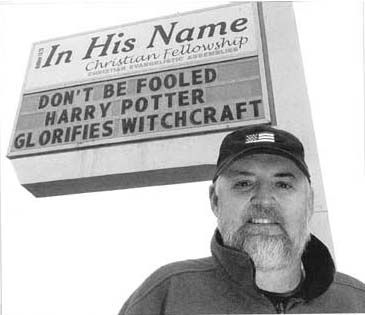
censorship," Hopkins wrote. Her poem, Manifesto, illustrates the true fears and vulnerability behind the call for censorship, supporting our discussion of how it is in the best interest of the ruling class to uphold and distribute artifacts reflective of ruling ideology. I also couldn't help but think of Tony's closer look at the banning of Harry Potter as I read it. Take a look...


Manifesto
To you zealots and bigots and false
patriots who live in fear of discourse.
You screamers and banners and burners
who would force books
off shelves in your brand name
of greater good.

You say you're afraid for children,
innocents ripe for corruption

by perversion or sorcery on the page.
But sticks and stones do break
bones, and ignorance is no armor.
You do not speak for me,
and will not deny my kids magic
in favor of miracles.

You say you're afraid for America,
the red, white, and blue corroded
by terrorists, socialists, the sexually
confused. But we are a vast quilt
of patchwork cultures and multi-gendered
identities. You cannot speak for those
whose ancestors braved
different seas.

You say you're afraid for God,
the living word eroded by Muhammed
and Darwin and Magdalene.
But the omnipotent sculptor of heaven
and earth designed intelligence.
Surely you dare not speak
for the father, who opens
his arms to all.

A word to the unwise.
Torch every book.
Char every page.
Burn every word to ash.
Ideas are incombustible.
And therein lies your real fear.

-Ellen Hopkins

I love the simplicity of this poem. There is nothing entirely too complex about it, which is fitting in the sense that it is accessible to the young audience she targets in her novels.  Also, I agree with a lot of what Hopkins says about exposing young adults to the "dark, edgy" content of her books, because it is reality for so many of the readers and their peers.  I distinctly remember reading CRANK, PERFECT, and TRICKS in the library of my high school, thinking about my best friend Kelsey, who was struggling with a sexually abusive relationship and cutting, and Sam who was coping with coming out as a lesbian and entering into her first relationship (with turned into a mentally and emotionally abusive situation). She, and a few other close friends, struggled with eating disorders. Many of my peers were experimenting or addicted to hard drugs and marijuana. The boy who sat next to me in anatomy was always high on hallucinogenic mushrooms.

Hopkins books not only related to the life of students around me, but provided testimonial and stories of people who overcame difficulties and addictions faced by my friends. The organizations that seek to ban or censor books like Hopkins' or Rowling's want to take them off the self to prevent deviant or subcultural behavior, but I'd argue that exposure to these kinds of books provide solutions to these very things. They encourage independent thought, strong positive morals and values, and the importance of responsibility and careful thought. 

Critics and conservatives argue that the art in question (like the Abject Art exhibition) doesn't relate to the general public or the masses, and while that does hold some truth, they fail to recognize the outlet for recovery and self discovery it allows for those who it most poignantly or strongly relate to it. Controversial art evokes necessary discussions, challenges dominant cultural understandings of social structures, and affords the readers/viewers the choice to see it and respond to it or simply to ignore it. 

On a related note, just as I was scrolling through Facebook this past week, I stumbled upon a CollegeHumor article about very carefully placed sexually implicit jokes in a familiar kid's show. It also included a little poke at fine art critics from the episode where Squidward teaches Spongebob about the creation, production, and qualifiers of fine art. If you want a good laugh, take a look at this article.

I started to wonder about just how much 'explicit' or sexually implicit content was really present in the shows I watched as a child (much younger than the readers of Hopkins' books).  I found endless links to sexual, homosexual, and sensitive content in children's tv shows.  One of the most shocking: 24 Filthy Adult Jokes In Cartoons You Completely Missed As A Kid. 

There are, I'm sure, plenty of reasons why these suggestive clips are aired without issue or censorship, and why publicly funded art that is seen by far fewer people is subjected to so much scrutiny. However, I still find it hard to believe that so many mainstream books, movies, and art collections are challenged for things that I find far less offensive than the jokes and references in cartoons. Maybe it's because the books, movies, and art are created for a purpose, and include 'questionable material' for a reason; and because of that, it is suppressed and censored.

If you get the chance, please also take a look at this article by Terry McCabe from a 1990 edition of the Chicago Tribune. He poses an interesting set of arguments, some of them not necessarily align with what we spoke about in class. I don't think it's contradictory, but complimentary. Take a look at Why It`s Necessary To Fund Controversial Art, Too. 


If you want to read more about Hopkins and her books, see these links:

http://childrensbooks.about.com/od/censorship/a/Teen-Author-Ellen-Hopkins-On-Censorship.htm

http://ellenhopkins.com/YoungAdult/books/


The Culture Wars: Hair Peace

This week our discussion of culture wars and banned material lead to a dumping ground of outrageously banned items. One of these: hair. This seems strange and a little outrageous because how can hair, a natural, human, attribute be banned? What's interesting about the answer is the type of hair that's most commonly banned, especially in the United States. 

Dreadlocks, dreads, or locs, by definition, is a "hairstyle where the hair that one would normally combo shed locks on itself, creating replace strands. Hair is not combed during the locking process, which it what causes the strands to coil around themselves into fused units" (Black Hair). Commonly associated with the West Indies, reggae, and African-Americans, dreadlocks have been a part of black culture for years.

Disney actress, Zendaya Coleman, sported gorgeous, waist-length locs to the Oscars as a way to bring some positive association (her own relational aesthetic?) to the style. Fashion-police star, Giuliana Rancic, however, had something else to say:
   

Zendaya responded quite eloquently via Instagram and Rancic was eventually pressured to apologize. 


While this exchange is not itself an example of banned material, the sentiments expressed by Giuliana are the same ones fueling the incessant banning of dreads, afros, puffs, braids and other almost exclusively African-American hairstyles. Schools and other institutions all over (see here, here, here, here, and here) have been enacting their own rules that ban these types of hairstyles on students and staff. 

HR Morning's Dan Wisniewski, penned an article titled "Is banning dreadlocks a race bias?" about a case that examined the issue. A candidate for a position at Catastrophe Management Solutions was offered a job, as long as she cut her dreads. When the candidate refused, the position was rescinded. She then went to the EEOC, which filed a suit on her behalf. The EEOC argued that "the policy banning dreadlocks in the workplace qualified as race bias against African-American employees;" the court vehemently disagreed. "Dreadlocks aren't a sole characteristics of African-American people, so banning them in the workplace doesn't amount to race bias."  

What does this mean for the culture wars? As we discussed a few weeks ago, the avant-grade reflected the needs of the powerful, and the works which were not classified as such were often "deviant." So when those in power deny funding/accreditation to the "kitsch," and create the rules that govern all, how can this all be reconciled? 

The Fight to Preserve Culture


Tony, Carmela, and Bill all referenced different creative works that have been censored to “protect” innocence. Harry Potter because it will cause children to worship the devil and practice witchcraft, LGBTQ artwork because homosexuality is wrong, and South Park because it is inappropriate.  The reality is that these reasons aren’t held as truths for all viewers or readers. This poses a problem, obviously, because there is never a universal culture that values things equally or interprets things the same way. So, when right-winged lawmakers and funders take action to ban or censor things that they don’t agree with, they are silencing the interpretations and voices of those with whom the creative works resonate. Another book that has been banned is The Bluest Eye by Toni Morrison because it has graphic sexual content and language. This has since been retained, but like I Know Why the Caged Bird Sings by Maya Angelou, also banned for sexually explicit language and violence, those cited scenes are examples of gender violence against women of color. Both books address racial issues, which is really what is offensive to those fighting for the books to be banned. What is overlooked is the historic context.

Censorship is by no means something of the past. As recently as this month, lawmakers in OK are trying to ban the established AP US History course because it tarnishes the perfect picture of the US. The goal is to protect students from “misinformation” that “reduces the roles of the Founding Fathers” and instead highlight what is good and “exceptional” about the country. Similar to the right-wing objective of protecting the innocent from things that can cause our American culture to deteriorate (like homosexual art, witchcraft literature), not allowing US students to learn alternate histories keeps them from learning how to think critically about the things we’ve done and instead encourages the reinforcement of the beliefs and ideologies about the US that the conservative lawmakers hold.

Also, Gayle Rubin’s essay Thinking Sex talks about moral panics and censorship through legislation. This ties to what Carmela talked about with the banning and destruction of art because it showed homosexual images and explicitly sexual things. She talks about the ways legislation has been used to attack those things that are ruining the quality of culture in the US. Her point is that while obscenity laws may actually have good intentions, like protecting children from sexual exploitation, they are often overdoing it. In this example, the laws extend into material that has no intention of being offensive or obscene. She references photographer Jacqueline Livingston to talk about the “child porn panic.” Livingston was fired from her position as a photography professor at Cornell University for an exhibit which contained nude photos of her seven-year-old son reasons. 

 “At one point, Kodak confiscated some of her film, and for several months, Livingston lived with the threat of prosecution under the child pornography laws. The Tompkins Country Department of Social Services investigated her fitness as a parent. Livingston’s posters have been collected by the Museum of Modern Art, the Metropolitan, and other major museums.” (Rubin, 146-147)
These attempts to censor the work that artists, writers, filmmakers, etc. (and historians, in the case of Oklahoma) are attempts to produce a culture where the ways of thinking, expressing, and feeling are limited to one way. If carried out, it can lead to really scary consequences. 

The LGBTQ Art Prohibition

When you think about it something is always getting banned, mostly because it threatens the conservative way of life. So it comes to no surprise that there is censorship of LGBTQ Art for being obscene, vulgar, offensive, lurid, degenerate, and the list could go on and on. We talked about the Corocoran gallery and the NEA. These photos were seen as nothing better than pornographic images. “The Perfect Moment” was not a well-liked gallery and to put it shortly Helms used his political influence to bully Corcoran into cancelling the show.

It’s been this way for years; LGBTQ art is not “mainstream” and therefore is deemed to be some kind of degenerate art. Censorship didn’t stop just at banning, but people would go as far to vandalize artwork, in fact art has been destroyed even after installation. This kind of attack on anyone’s art is enough to make some artists run away. They would go back into the closet and set their own work aflame. This was in order to have some semblance of control where at least the destruction of the art was in a way to respect their pieces. However this self-censorship was perhaps even more deadly than the government enforced one. Either an artist stopped all together or they steadily avoided anything that could be perceived as homosexual subject matter.

It was argued that it wasn't censored because of the homosexual content but of the pornographic content. But artists who refused to be held back because of prohibitions were censored even if it was just sympathetically or positive art of LGBTQ people and culture. Censorship is a mostly horrible act, especially to those whose creativity is suddenly contained and ridiculed. However, in some instances there is a positive backlash to this.

Prohibition causes the object of censorship to attract wider attraction and all together encourages the censored object. The prohibition of alcohol merely led to more people getting drunk and you know the rise of organized crime. Speakeasies became a thing and moonshine was a thriving business. We have at least one popular HBO show and Lawless the movie to show just how well that one went. 

(Boardwalk Empire)
And now there is Leslie-Lohman Museum of Gay and Lesbian Art in New York City. 
They took the censorship of Mappkethrope’s art and counter it exhibiting images that were considered too obscene by conservatives. This exhibition is titled “Irreverent: A Celebration of Censorship.”

 “The exhibition draws inspiration from the innovative responses to watershed moments in the history of censoring LGBTQ art in Canada, England, Ireland, the Netherlands, South Africa, Sweden, Turkey, and the United States," exhibition curator Jennifer Tyburczy explained in a press release. "In concept, the show is principally drawn from two events: the censorship of Robert Mapplethorpe’s art in the 1980s and 1990s and the more recent withdrawal of David Wojnarowicz’s 'A Fire in My Belly' from the National Portrait Gallery in 2010. In practice, it seizes on the international fame of these controversies to delve deeper into the many ways that censorship functions in queer artistic life.” (http://www.huffingtonpost.com/2015/02/02/irreverent-a-celebration-of-censorship_n_6566530.html)

Woodson, Jason, This Kid - 20 Years On - A Tribute to David Wojnarowicz' Untitled - This Kid, 2010, framed giclee print, 23.386 x 33.110 in. Collection of Jason C. Woodson

Monday, February 23, 2015

Harry Potter and the Deathly Cesnsorship


This week in class, we spoke a great amount about NEA defunding and the censorship within the art world. This, in addition to having to find something to bring into class, got me thinking about Harry Potter and how it has been censored and even banned in places all across the world. Before I get into the main points, I need to come out and say that I’m a HUGE Harry Potter fan and some of my arguments may be swayed. In class on Thursday, I mentioned that the Harry Potter series is currently the most banned series or collection of books in the entire world. Additionally, years 1-4 are the seventh most banned collection of books. The same books are within the top ten banned books across the globe! This, to me, is mind boggling.

At first, the books were well received by many stating that the series would become classics for everyone to read for years and years to come. However, everything changed with the release of the fifth year, Harry Potter and the Order of the Phoenix. Not only did critics attack J. K. Rowling for her style of writing but they also attacked the entire concept that was truly beginning to emerge. This was seen as a darker and more violent Harry Potter which multiple deaths and betrayals. One critic who comes from a fundamentalist American Christian group “contends that the books promote witchcraft, Satanism, and anti-family themes. They also claim that the movies ‘subconsciously market a new belief system on the viewing public.’” (You can view this article here.) This breaks down to the idea that having a witch or magic or a class entitled “Defense Against the Dark Arts” automatically makes the reader influenced by the Devil. The main ideologies that are attributed to devil worshiping are thus attached to the readers.

Additionally, in places such as Queensland, Australia began to censor and ban the series because they were violent and dangerous to the readers who happen to be small children. In New Mexico, anti-Harry Potterists (my own creation there) challenged the books because they encouraged children to lie, cheat, steal, and even injury others. The reasons go on and on about why Harry Potter should not be read and how it should be considered dangerous. 

However, what these people tend to forget are the real messages behind the most popular series of all time. For instance, Harry Potter teaches young girls that they can do whatever they want in a world that often idolizes males and puts females into a lower category. With the character Hermione, young female readers are able to see what women are capable of. Hermione is known as being the wisest witch of her time- smarter than every male. She is also seen as one of the bravest, most supportive, most powerful, and even an independent young lady. She is not the stereotypical girl that is often seen in other popular novels. She is not a fainting virgin that always needs someone else to help her out of a situation. It is quite the opposite actually. Hermione often comes to the rescue of both Harry and Ron throughout there years together at Hogwarts. Rowling is showing young women that they can be like Hermione too, even when others try to get in your way and tell you that you are not good enough- women have the same capabilities as men and thus are just as good, if not better. 

Also forgotten by anit-Harry Potterists, is the pleasure of reading Harry Potter gives to children who may be outcasts or think of themselves as less. Hogwarts is a place to escape to for all readers but it is these types of readers who get the most out of the school of witchcraft and wizardry. All principal characters are in one way or another considered outcasts by the general public, are teased, and are belittled at some point in the series. This creates a reliability for readers who have experienced the same feelings and have felt like they don’t belong. Rowling is showing that outcasts or those who are seen as different do not have to be little but instead can rise above the rest and become the hero at the end of the day.